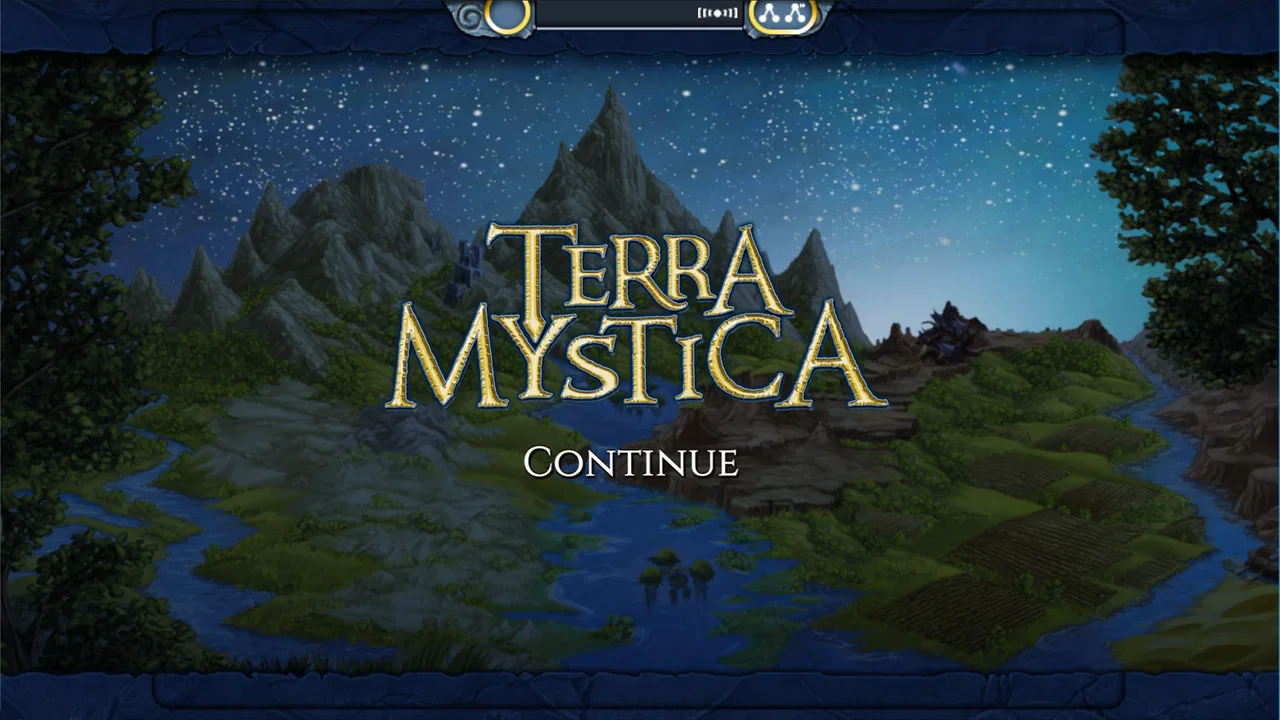
Terra Mystica
- 3.8
- Rating
- 10.00K
- Installs
- $9.99
- Price

 Analysis by App-foxy
Terra Mystica is the kind of board game I open when I want a serious strategy session rather than a quick distraction. It is a digital adaptation of a demanding tabletop experience, presented by DIGIDICED for Android, and its central appeal is clear from the first proper match: every decision affects the shape of the map, the value of future turns, and the pressure created by the other players. I found it rewarding, but not especially welcoming if you are looking for something casual or immediately intuitive.
This is a paid board game priced at $9.99, with optional in-app purchases listed at $6.49 per item. That combination deserves attention before downloading. The main purchase gives the game a premium position, while the additional items mean the overall spending picture is not quite as simple as “pay once and everything is settled.” I would approach it as a specialized strategy purchase, not as a general-purpose mobile game for filling five-minute gaps.
Learning the map, the factions, and the pressure of every turn
The game asks you to think in several directions at once. You are not merely placing pieces or collecting points. You are trying to develop territory, manage resources, improve your faction’s position, and prevent opponents from taking the spaces or opportunities that make your own plan work. That layered structure is what gives Terra Mystica its depth, but it also explains why the first few sessions can feel more like study than entertainment.
You May Also Like

 Pandora - Music & Podcasts
Pandora’s Music Is Easy to Start, but Harder to Recover
Pandora’s strength is its low-effort path from a seed to a station. Its weak spot is how much confidence it asks you to place in connection, setup, and quiet recovery.

 AccuWeather: Weather Radar
AccuWeather Review: A Quick, Clear Forecast for Everyday Decisions
For everyday plans, the best forecast is the one you can understand quickly. AccuWeather makes rain timing, radar, and local conditions easy to act on, with a few trade-offs.

 Hill Climb Racing
Why Hill Climb Racing Still Turns Crashes Into One More Run
A tiny car, a bumpy hill and one more upgrade: Hill Climb Racing keeps resurfacing because its simple chaos makes every near-miss feel personal.

 AliExpress - Shopping App
AliExpress Makes Global Shopping Feel Personal, but Shoppers Bear the Risk
AliExpress turns a global marketplace into a pocket-sized discovery engine. Its reach is useful, its shopping loop compelling, and its trade-offs easy to miss.

 Lords Mobile: Kingdom Wars
Lords Mobile Is a Kingdom-Building Routine, Not a Quick Match
A case-by-case verdict on the building, battles, device demands, and social commitments that make Lords Mobile rewarding for some players and exhausting for others.

 PDF Scanner app - TapScanner
TapScanner Makes Paperwork Easier to Capture, Check, and Share
TapScanner makes scanning with a phone feel less like a rescue operation and more like a dependable step in getting work done. Its capture tools are useful, though not flawless.
More From Our News Desk
View All News


I recommend treating the opening match as a learning exercise. Trying to play perfectly immediately is frustrating because the consequences of an early decision may only become obvious much later. A move that looks efficient can leave you short of the resource needed for expansion, while a seemingly modest upgrade may create the flexibility required for several future turns. The game rewards players who look beyond the current action and ask what that action makes possible next.
One of the most useful habits is to plan around the map rather than around a favorite action. New players often see an attractive location and rush toward it, only to discover that the route consumes too much time or leaves their economy awkwardly positioned. I get better results by first identifying a small number of connected areas that support one another, then checking whether the cost of reaching them fits the rest of my development plan.
That approach also makes the board feel less random, even though the other players can disrupt it. I am constantly weighing immediate gains against future access. Taking a space now may deny it to someone else, but it may also commit me to a direction that is expensive to maintain. Waiting can preserve resources, yet hesitation gives opponents room to build the network I wanted.
Why progress feels satisfying and stressful
The strongest part of the design is the way progress creates pressure instead of simply making you stronger. Improvements matter because they change what you can afford or reach, but the board does not pause while you prepare. Other players are developing at the same time, and a comfortable plan can become obsolete after one contested area disappears.
I especially enjoyed the tension between building an efficient engine and responding to the table. A purely personal plan is rarely enough. You need to notice who is approaching a valuable region, who is gaining an advantage from a particular scoring opportunity, and whether helping another player indirectly makes your own position worse. This is where the app feels like a proper board-game adaptation rather than a collection of isolated actions.
There is a practical lesson here for anyone learning the game: do not judge a strategy only by how much it produces immediately. A smaller gain that improves your future choices can be more valuable than a larger reward that leaves you boxed in. I found that keeping several possible routes open was often safer than committing too early to the most obvious scoring line.
The downside is that the pressure can be difficult to read until you understand the game’s rhythm. If you miss an important timing window, you may spend the rest of the match repairing a weak position. That is not necessarily unfair, but it can feel severe when you are still learning. The game is much more enjoyable once you accept that some matches are lessons rather than demonstrations of your skill.
Playing alone, with friends, or against experienced opponents
The store summary presents Terra Mystica as a strategy board game for up to five players, and that player range shapes the experience considerably. With more people at the table, the map becomes more contested and plans are harder to protect. That can create exciting interaction, but it also increases the chance that your preferred route is interrupted before you have had time to establish it.
Smaller games feel more readable to me. There is less noise, and it is easier to understand why a particular opponent is taking a certain space. A larger group creates more uncertainty and more negotiation through actions, even when nobody is speaking directly. I would choose the player count based on the mood I want: a tighter puzzle for focused practice, or a more volatile contest where adaptation matters more than a carefully protected opening.
For an everyday scenario, imagine a weekend evening when three friends are available but nobody wants to set up a physical board. This app can be a convenient way to start a substantial strategy session without finding table space or sorting pieces. It is not the ideal choice if everyone has only ten minutes, because the mental overhead remains high even when the interface makes setup easier.
I would also avoid introducing it to a group that expects to understand the rules through casual play. A patient friend who enjoys learning systems will probably appreciate the process. Someone who prefers a quick card game may spend the first session waiting for the explanation to end. The difference is not about intelligence or experience; it is simply the amount of planning the game expects from its players.
Fairness when money is part of the decision
The purchase structure is worth considering carefully. The game costs $9.99, and the listing also shows in-app purchases of $6.49 per item. I can discuss the spending clearly at that level: you should expect a paid entry point and be aware that optional purchases are part of the product’s commercial setup. I would not describe it as a purely one-time purchase without checking exactly what those additional items represent in your store region and account.
That distinction matters for fairness. A strategy game feels most trustworthy when the result of a match comes from planning, timing, and adaptation rather than from buying an advantage. The available purchase information does not establish what the optional items do, so I would not claim that they affect competitive balance, unlock cosmetic content, add scenarios, or provide any other particular benefit. If spending beyond the initial price matters to you, inspect the purchase descriptions before committing.
From my perspective, the safest way to evaluate the value is to ask whether the core board-game experience is already what you want. If you are buying it because you enjoy deep territorial strategy, the initial price may be reasonable for a focused premium game. If you are hoping for a broad collection of lightweight modes, frequent free content, or a low-cost experiment, the purchase is harder to justify.
Fair competition also depends on the people sharing the match. Experienced players can make the learning curve feel much steeper than the rules alone suggest. A newcomer may appear to have the same options as everyone else while lacking the knowledge to recognize which opportunities are urgent. I recommend starting with players who are willing to explain their reasoning, rather than using a first match as a test of whether the game is “easy.”
The game’s age rating is Everyone, which makes it broadly accessible in that formal sense. That should not be confused with being simple. The content rating tells me the game is suitable for a wide audience, while the strategy system still demands patience, concentration, and a willingness to learn from mistakes.
What the technical details mean in everyday use
Terra Mystica was released on April 20, 2017, and the current version is 110. It requires Android 5.1 or later. Those details suggest that compatibility should be manageable for many Android users, although I would still check the requirements on the specific device you plan to use. A compatible operating system does not automatically guarantee that every screen size or control layout will feel equally comfortable.
The game has passed 10K installs, with an average rating of 3.8 from around 1.2K ratings and 144 written reviews. I read that overall response as mixed but meaningful: there is clearly an audience for the adaptation, yet it is not a universally effortless experience. A rating in that range makes me more interested in the details of the experience than in treating the score as a simple recommendation.
In practice, the interface has an important job because the underlying game contains many relationships to track. I found that careful reading is more valuable than rushing through turns. Before confirming an action, I like to check what it changes, what it costs, and whether it closes a better option. This sounds obvious, but it is particularly important here because a fast tap can turn a thoughtful plan into an expensive mistake.
Another useful workflow is to keep a mental distinction between actions that improve your economy and actions that exploit the current scoring opportunity. Mixing those goals without a reason can leave you halfway prepared for both. I prefer to decide at the beginning of a round whether I am mainly building future capacity or converting my existing position into points, then adjust only when the opponents force me to.
I would also reserve time for reading and reflection between turns. This is not a game I would recommend playing while watching a show or answering messages. The board state changes enough that divided attention can make the experience feel confusing, and the confusion is often caused by missed information rather than by poor design.
Where it stands beside lighter board games
Compared with casual digital board games, Terra Mystica is much more demanding. A lighter alternative is usually easier to explain, faster to restart, and less punishing when a player makes an early mistake. If your ideal mobile board game is something you can teach in a few minutes and finish without much planning, this is probably the wrong direction.
Compared with a physical strategy board game, the app has the obvious convenience of keeping the board state in one place. You do not need to manage tokens manually, and the digital format makes it easier to return to the same kind of match whenever you have the time. The trade-off is that the screen can make a complicated position feel less tangible than a table covered with visible pieces and reference material.
It also differs from many mobile strategy games that rely on short sessions and constant rewards. Terra Mystica asks for deliberate choices instead of giving you a steady stream of effortless progress. I prefer that when I want a genuine planning challenge, but I would choose a quicker alternative for commuting, waiting rooms, or any situation where I may need to stop suddenly.
One non-obvious trade-off is that accessibility and depth pull in opposite directions here. Digital automation can reduce the physical work of a board game, but it cannot remove the need to understand why an action is strong or weak. The app may make setup easier while leaving the intellectual learning curve intact. That is a benefit for experienced players and a warning for newcomers expecting the software to teach everything automatically.
Who should spend time with it, and who should skip it
I would recommend it to players who enjoy planning several turns ahead, watching opponents closely, and improving through repeated attempts. It is particularly suitable for someone who already likes complex board games and wants a mobile version that can support a serious session without relying on a physical collection.
I would be more cautious with anyone who dislikes losing because of an early decision. The game’s pressure comes partly from the fact that timing and positioning matter, so recovering from a poor opening may be difficult. That can be satisfying when you understand the lesson, but discouraging when you simply want every match to remain competitive until the end.
I would also skip it if your main requirement is transparent spending with no need to investigate optional purchases. The known price is clear, but the presence of $6.49 items means I would personally review their descriptions before buying. That is not proof of a problem; it is simply the sensible step when a premium game also presents additional spending.
For families, the Everyone rating makes the content broadly suitable, but the strategic complexity may still be better suited to older children or adults who enjoy rules and planning. I would introduce it through a relaxed learning match rather than expecting a child or first-time player to compete immediately with someone who already knows the system.
The questions I would settle before downloading
Is it suitable for a short break? Not really, unless you are comfortable pausing a complex decision and returning later. The game is better for a planned session than for a few distracted minutes. Its value comes from sustained attention, not from rapid rewards.
Is it a good first board game? Only for a player who actively wants a demanding introduction. For most beginners, I would start with something lighter and return to this once the basic habits of resource planning and board awareness feel familiar.
Does paying the initial price guarantee that there will be no further spending? I would not assume that. The listed price is $9.99, and optional purchases of $6.49 per item are also shown. Since their exact role is not established here, checking the item descriptions is the responsible way to decide whether the total value suits you.
Can a newcomer compete with experienced players? Yes, but not immediately on equal practical footing. The rules may give everyone the same formal options, yet experienced players understand timing, map pressure, and opportunity costs much better. A friendly learning environment makes a large difference.
Is the app worth choosing over a lighter alternative? For me, yes when I want a concentrated strategy challenge and have enough time to think. No when I want a relaxed, fast, or highly accessible board game. The choice depends less on the category label and more on whether you enjoy the demanding style this particular title brings to it.
My trust verdict after weighing the whole package
Terra Mystica is a serious board-game adaptation with enough strategic tension to justify attention from dedicated players. I like that the decisions feel connected: territory, development, timing, and opposition all push against one another. The best moments come when a modest early choice quietly creates a strong route several turns later, or when I notice an opponent’s plan soon enough to reshape my own.
Its limitations are equally important. The learning curve is substantial, mistakes can linger, and the game is poorly suited to distracted play. The commercial structure also deserves a careful look because the $9.99 purchase sits alongside optional $6.49 items. I can recommend the game as a focused premium strategy experience, but I would not present it as a universally safe purchase for every mobile player.
My final advice is simple: choose it if you want to sit down with a demanding digital board game and learn through repeated matches. Start slowly, protect your future options, watch how the map changes, and do not confuse a quiet opening with a successful one. If you want instant accessibility or completely straightforward spending, a lighter alternative may serve you better. For the right player, though, DIGIDICED’s adaptation offers a thoughtful challenge that rewards attention rather than impatience.
FAQs for Terra Mystica
01What is Terra Mystica, and how does the mobile version work?
Terra Mystica is a strategic board game in which players lead different fantasy factions, transform terrain, build settlements, and compete for influence across a shared map. The mobile version adapts the original tabletop experience for touchscreens, including faction management, resource planning, terraforming, and area expansion. It is designed for thoughtful, turn-based play rather than quick action, so each decision can affect the entire game.
02Is Terra Mystica suitable for beginners?
Terra Mystica has deep rules and many interconnected systems, so it can feel challenging during the first few games. New players must learn how terrain conversion, workers, priests, power, shipping, trading posts, and faction abilities interact. The app is more approachable if you begin with a simpler faction and use any available tutorial, rule reference, or practice mode before competing against experienced players.
03Can I play Terra Mystica offline or without creating an account?
Offline availability and account requirements may depend on the version, platform, and current app configuration. Terra Mystica is primarily a strategy game, so solo play or local options may be available in some editions, while online multiplayer generally requires an internet connection and may require sign-in. Check the store listing and in-app settings before downloading if offline access is important to you.
04Does Terra Mystica include multiplayer and online competition?
Multiplayer is one of Terra Mystica’s main strengths because the game’s economy and map control become especially interesting when facing human opponents. Depending on the edition, you may find online matches, asynchronous turns, local play, or AI opponents. Match length can be considerable, particularly with several players, so it is best suited to users who enjoy slow, competitive strategy rather than short casual sessions.
05Are there in-app purchases, expansions, or differences between Android and iOS?
The available content, pricing, expansions, and purchasing model can vary between Android and iOS, as well as between regions and updated editions. Before installing, review the official store page for supported devices, included factions, multiplayer features, and any optional purchases. Players who already know the board game should also confirm whether the digital version includes the same maps, factions, and rules they expect.
Pros
- Deep strategic gameplay with strong replay value
- Asymmetric factions make every playthrough feel distinct
- No luck-based combat keeps outcomes focused on planning
- Multiple paths to victory support varied play styles
- Excellent for fans of complex board game adaptations
Cons
- Steep learning curve can overwhelm newcomers
- Matches may take a long time to complete
- Small interface elements can be difficult on phones
- Limited appeal for players seeking quick
- casual sessions
- The many rules and factions require careful study

Terra Mystica
Gallery